
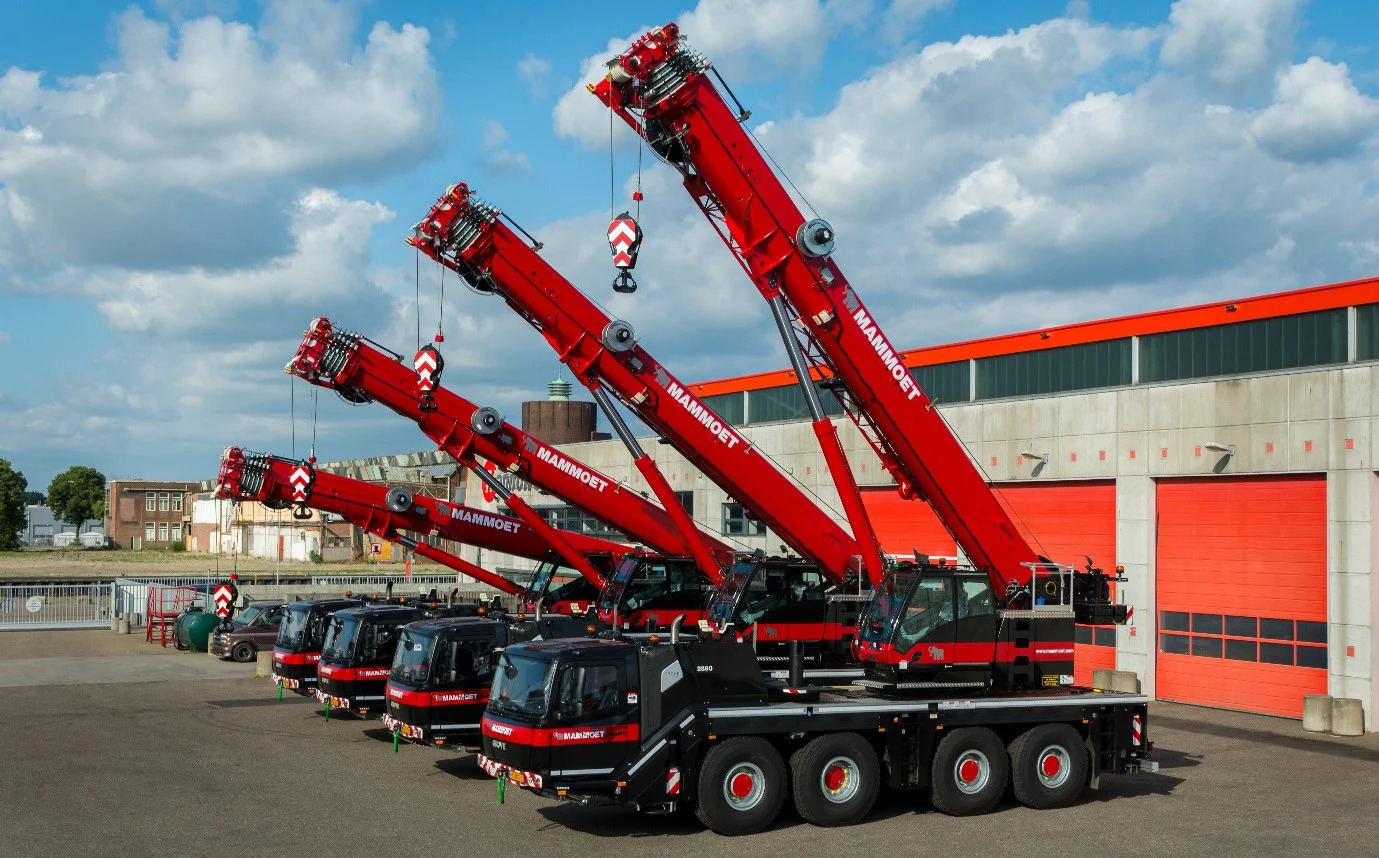
Market Overview:
The crane market is experiencing rapid growth, driven by global infrastructure modernization, renewable energy expansion, and industrial automation and e-commerce. According to IMARC Group's latest research publication, "Crane Market Size, Share, Trends and Forecast by Product Type, Application, and Region, 2026-2034", The global crane market size reached USD 55.6 Billion in 2025. Looking forward, IMARC Group expects the market to reach USD 78.2 Billion by 2034, exhibiting a growth rate (CAGR) of 3.85% during 2026-2034.
This detailed analysis primarily encompasses industry size, business trends, market share, key growth factors, and regional forecasts. The report offers a comprehensive overview and integrates research findings, market assessments, and data from different sources. It also includes pivotal market dynamics like drivers and challenges, while also highlighting growth opportunities, financial insights, technological improvements, emerging trends, and innovations. Besides this, the report provides regional market evaluation, along with a competitive landscape analysis.
Download a sample PDF of this report: https://www.imarcgroup.com/crane-market/requestsample
Our report includes:
- Market Dynamics
- Market Trends And Market Outlook
- Competitive Analysis
- Industry Segmentation
- Strategic Recommendations
Growth Factors in the Crane Market
- Global Infrastructure Modernization
The surge in large-scale infrastructure projects across both developing and developed nations is a primary driver for the mobile crane market. Governments are allocating trillions of dollars toward transportation networks, including high-speed rail, airport expansions, and smart city developments. For instance, India’s Bharatmala Project and the Smart Cities Mission have catalyzed massive demand for mobile and tower cranes to handle heavy materials in increasingly dense urban environments. In North America, the Infrastructure Investment and Jobs Act continues to fuel the refurbishment of aging bridges and highways, requiring high-capacity all-terrain cranes. Furthermore, the global construction market, valued at approximately $15 trillion, relies heavily on specialized lifting equipment to meet tight project timelines. This sector-wide expansion ensures a steady pipeline of procurement and rental activity, further strengthening growth across the mobile crane market as construction firms seek more efficient, higher-tonnage machines to manage the complex logistics of modern, multi-billion-dollar infrastructure developments.
Renewable Energy Expansion
The global transition toward clean energy is creating a specialized niche for high-capacity cranes, particularly within the wind energy sector. As onshore and offshore wind turbines scale to heights exceeding 200 meters and capacities over 6 MW, standard lifting equipment is becoming insufficient. Manufacturers like Zoomlion have responded by launching record-breaking models, such as the LW3600-240NB, a luffing jib tower crane specifically designed for wind power installations with a 240-tonne capacity. This shift is mirrored in the offshore segment, where massive crawler cranes are essential for assembling turbine components at port facilities. The energy transition requires not only raw lifting power but also precision in extreme environments, leading to significant investment from energy companies. With hundreds of new wind farms planned globally, the demand for specialized heavy-lift cranes is outpacing general construction equipment needs, making the energy sector a dominant force in market growth.
- Industrial Automation and E-commerce
The rapid expansion of the e-commerce sector has fundamentally changed logistics requirements, driving the need for compact and efficient loader cranes. With global e-commerce sales reaching approximately $6 trillion, there is an urgent demand for last-mile delivery infrastructure and micro-fulfillment centers. These facilities utilize small-scale, truck-mounted cranes to optimize the loading and unloading of goods in space-constrained urban areas. Additionally, the move toward Industry 4.0 has integrated cranes into automated manufacturing lines. Companies are increasingly adopting overhead and gantry cranes equipped with smart sensors to streamline material handling. For example, the adoption of loader cranes for urban delivery and warehouse operations has grown alongside the 20% annual increase in the last-mile delivery market. This industrial shift emphasizes high-speed, repetitive precision over traditional bulk lifting, ensuring that the crane industry remains central to the evolving global supply chain and manufacturing landscape.
Key Trends in the Crane Market
- Integration of IoT and Telematics
Digitalization is no longer a secondary feature but a core component of modern crane operations. The integration of Internet of Things (IoT) sensors and telematics allows fleet managers to monitor equipment health, fuel consumption, and load accuracy in real time. Companies like TIL and Liebherr are leading this trend by equipping their latest models with cloud-based dashboards that provide instant alerts for maintenance needs. This shift toward predictive maintenance helps operators avoid costly downtime by addressing mechanical issues before they lead to failure. Furthermore, data-driven safety checklists and digital logs are becoming standard requirements for compliance with international safety norms. Projects utilizing these smart lifting systems have reported a reduction in near-miss incidents by as much as 80%, demonstrating the practical value of connectivity. As construction sites become more data-centric, the crane is evolving into a connected asset that provides critical operational insights.
- Shift Toward Electrification and Hybrid Power
Environmental regulations and rising fuel costs are pushing the industry toward sustainable power solutions. Manufacturers are increasingly showcasing battery-electric and hybrid models, such as the Konecranes E-Hybrid RTG and Liebherr’s MK 140-5.1E, which can operate using site power to eliminate local emissions. This trend is particularly prominent in urban centers where noise and emission restrictions are strictly enforced. Electric cranes are not only eco-friendly but also offer lower long-term operational costs due to reduced engine maintenance and energy recovery systems. For instance, regenerative braking technology allows cranes to capture energy during load lowering and reuse it for the next lift. As port authorities and large-scale contractors commit to carbon-neutral targets, the adoption of zero-emission lifting equipment is moving from niche applications to mainstream procurement. This transition is supported by advancements in battery density, allowing electric cranes to handle heavier loads for longer durations.
- Semi-Autonomous and Remote Operation
To address the global shortage of skilled operators and enhance site safety, the industry is trending toward semi-autonomous and remote-controlled systems. Modern cranes now feature AI-assisted load optimization and anti-collision devices that automatically prevent the boom from entering "no-go zones" or colliding with nearby structures. Remote operation stations allow pilots to control cranes from a comfortable, ground-level environment, significantly reducing physical fatigue and exposure to hazardous conditions on high-rise sites. For example, in complex metro or refinery projects, operators use high-definition cameras and haptic feedback controllers to execute precise lifts from hundreds of meters away. This trend also facilitates better site coordination, as software can orchestrate the movements of multiple cranes simultaneously to prevent bottlenecks. By reducing the reliance on purely manual judgment, these technologies improve movement consistency and allow for the safe execution of difficult tandem lifts in congested environments.
Leading Companies Operating in the Global Crane Industry
- Broderson Manufacturing Corporation (Lanco International Inc.)
- Hiab Corporation
- IHI Corporation
- Kobelco Construction Machinery Co., Ltd
- Konecranes
- Link-Belt Cranes (Sumitomo Heavy Industries Ltd.)
- Tadano Ltd
- Terex Corporation
- The Liebherr Group
- The Manitowoc Company Inc.
- XCMG Group
Crane Market Report Segmentation
By Product Type:
- Mobile Cranes
- Marine and Port Cranes
- Fixed Cranes
Mobile cranes dominating the market with 78.6% share in 2024, mobile cranes are favored for their advanced hydraulic systems, versatility in various environments, and increased demand due to urbanization.
By Application:
- Construction and Infrastructure
- Mining
- Oil and Gas
- Others
Construction and Infrastructure leading with a 35.0% market share in 2024, this sector's need for specialized cranes stems from the complexity of projects and ongoing infrastructure maintenance and development.
Regional Insights:
- North America (United States, Canada)
- Asia Pacific (China, Japan, India, South Korea, Australia, Indonesia, Others)
- Europe (Germany, France, United Kingdom, Italy, Spain, Russia, Others)
- Latin America (Brazil, Mexico, Others)
- Middle East and Africa
Asia Pacific holding over 45.0% market share in 2024, this region's rapid infrastructure development and urbanization drive significant crane demand, supported by economic growth and favorable regulatory conditions.
Note: If you require specific details, data, or insights that are not currently included in the scope of this report, we are happy to accommodate your request. As part of our customization service, we will gather and provide the additional information you need, tailored to your specific requirements. Please let us know your exact needs, and we will ensure the report is updated accordingly to meet your expectations.
About Us:
IMARC Group is a global management consulting firm that helps the world’s most ambitious changemakers to create a lasting impact. The company provide a comprehensive suite of market entry and expansion services. IMARC offerings include thorough market assessment, feasibility studies, company incorporation assistance, factory setup support, regulatory approvals and licensing navigation, branding, marketing and sales strategies, competitive landscape and benchmarking analyses, pricing and cost research, and procurement research.
Contact Us:
IMARC Group
134 N 4th St. Brooklyn, NY 11249, USA
Email: sales@imarcgroup.com
Tel No:(D) +91-120-433-0800
United States: +1-201-971-6302